
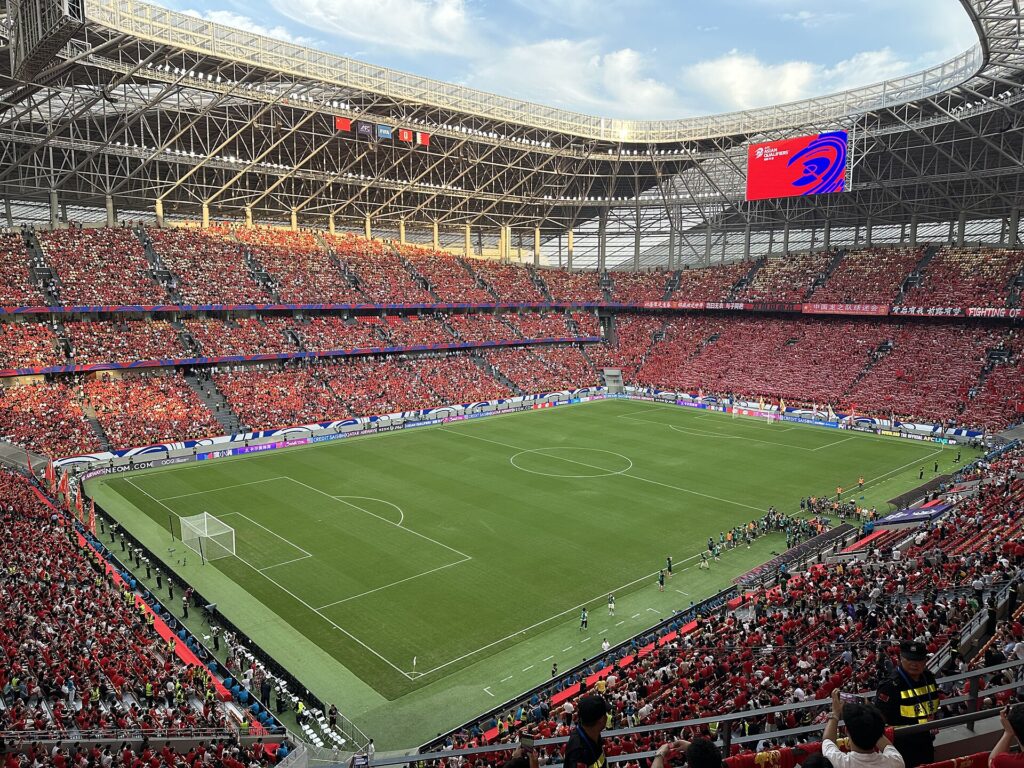
Most football analysts are obsessed with lagging indicators such as xG (expected goals) or player injury and suspension lists. This analytical approach is essentially a restatement of known outcomes rather than logical deduction of unknown results. The real contest lies in those overlooked physical variables. One variable regarded as mere background by the vast majority of analysts — the coefficient of friction of the pitch surface and its non-linear relationship with moisture saturation — is actually the underlying logic that determines the success or failure of Transition-based Tactics.
Within the “high pressing” system of modern football, the core of the tactic is to win back possession through collective coordination within an extremely narrow time window (usually 3–5 seconds after losing the ball). This process relies on two absolute physical quantities: the ball velocity ($v_{ball}$) and the player’s initial acceleration ($a_{player}$). When the pitch grass length, moisture content and soil compaction change, the rolling friction of the ball shifts significantly.
Specifically, when the grass is oversaturated with water or too long, the rolling resistance of the ball rises, accelerating the decay rate of the ball’s initial pass velocity. Macroscopically, this simply reads as “the ball moves slower”, yet in micro-level match dynamics, it means the time window between the passer and receiver is forcibly extended. For teams relying on Vertical Tiki-Taka, a delay of 0.2 seconds allows opposing defenders to complete a cognitive shift from “passive reaction” to “active interception”.
Tiny physical deviations of this kind are amplified by the theory of cognitive load in behavioral economics. When a midfielder accustomed to quick ball circulation finds that the ball’s trajectory fails to match the physical model in their brain, their decision-making time increases and their movements become distorted. At this point, the coordination of high pressing breaks down, and three players who should close off space simultaneously develop time lags. In game theory, this time lag is known as “coordination failure”, which instantly transfers control of the match from the attacking side to defenders capable of counterattacking with a slow-moving ball.
To quantify this logic, we can observe the negative correlation between high pressing success rate and ball velocity decay rate under different physical pitch conditions:
| Physical Variables | Low-Friction Environment (Short grass / Dry) | High-Friction Environment (Long grass / Wet) | Tactical Impacts |
| —- | —- | —- | —- |
| Ball velocity decay rate | Low | High | Extended passing time window |
| Interception success rate | Low (reliant on anticipation) | High (reliant on coverage) | Improved defensive fault tolerance |
| Transition speed | Extremely fast | Moderate | Forced disruption of attacking rhythm |
| Psychological stress point | Receiver (tight time constraints) | Passer (reduced accuracy) | Shift of contest focus from receiving to passing |
When this physical environment collides with specific tactical tendencies, the “inevitability” of predicted outcomes begins to emerge. For example, a team heavily reliant on quick transitions and intense high pressure will suffer a sharp drop in tactical robustness when facing opponents who favour slow ball retention on a high-friction pitch (such as long grass after rain). At this point, traditional metrics like “league ranking” or “recent form” become meaningless, because the physical environment has deconstructed their core competitive advantage at the fundamental logical level.
Further analysis shows that such physical failure can trigger the collapse of players’ psychological thresholds. According to Loss Aversion theory, when players realise their habitual tactical tools (such as quick passing) are ineffective under current conditions, intense anxiety arises, leading to extreme tactical execution — either overcommitting to risky penetrative passes or falling into a conservative loop of sideways passes. This shift in mental state usually occurs between the 20th and 35th minute of a match, the cognitive threshold where players recognise a mismatch between themselves and the physical pitch conditions.
At equaliser moments or during tightly contested matches, the impact of these physical variables is amplified further. When a player is fatigued (lactic acid buildup reduces muscle contraction speed) on a high-friction pitch, their error margin in judging ball velocity grows exponentially. A well-intended angled pass may lack sufficient speed due to minor fluctuations in friction, turning directly into an interception opportunity for the opposing defender. This causal chain: physical quantities → biomechanics → psychological cognition → match outcomes, represents the genuinely predictive micro dimension in football forecasting.
Therefore, an analyst well-versed in game theory, when examining a match, no longer focuses on which players are in peak form. Instead, they analyse whether the physical environment of the fixture supports a particular tactical model. If a speed-oriented system operates within an inefficient physical medium, no matter how strong its paper strength, the result tends toward entropy — chaos and loss of control.
This analytical framework elevates football prediction from probability-based “guessing” to coupled physical and psychological “deduction”. When we fix our perspective on the micro lens of pitch friction coefficient, seemingly random match results reveal their inherent logical inevitability. All coincidences are, in essence, unquantified certainties.
Comments 0
No comments yet.